
LEONARDO RINALDI
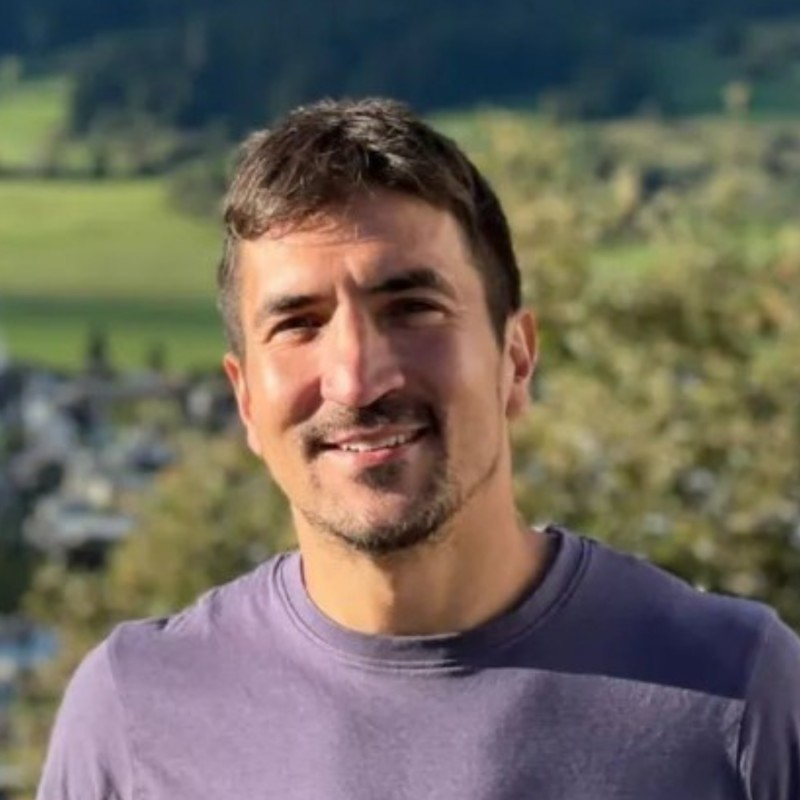
Internships – I have begun my internships in my fourth season; I have started at a software company (Base Software), then at a design studio (Beth Barbosa Design) and at the advertising agency Binder FC + G (the ‘G’ standing for creative director Bob Gueiros). It has been there that I truly felt I have found my calling; in the agency’s creative department alongside art directors, copywriters, designers and a programmer, I have begun to dream of working abroad for a while – an idea that wasn’t just mine, but shared by practically every creative that were working there. As graduation has drawn near, I have realised I needed to focus solely on finishing my degree, so I have asked to leave the internship. Work – After finishing my degree, I have been unemployed for a while and worked on a temporary basis at companies where I would soon be employed full-time. As a magazine layout designer, I have been employed at Caras magazine for about two years, experiencing the pace of a newsroom, turning out a magazine every week, and as soon as one was finished, the next one was starting the next day. Later, after I have left, I set up a graphic design studio with a friend, João Geszti, called Studio Hangar, but the partnership didn’t keep long. I have kept the name and the domain, and later designed the logo for the studio and continued working as a freelancer. Six months later, I have begun working at the National Confederation of Trade in Goods, Services and Tourism (CNC)1 as a visual programmer, alongside my freelance design work, I have been creating various types of projects. I have eventually established a professional relationship with Ernane Galvêas (former Minister of Finance of Brazil (1980–1985) and former President of the Central Bank of Brazil (1968–1974 and 1979–1980) (IN MEMORIAM)), who was the economic advisor and coordinator of the CNC’s Technical Council2; I have been developing several book projects for this council. I have been tasked with the creation of a new signage design for the entity’s two buildings, a task assigned to me by my manager and head of the entity’s Communications Department. Courses – During my time working at Editora Caras, I have taken a two-year course in special effects at Azymut, studying Combustion, After Effects and 3ds Max; once at CNC, I have aimed to create a sort of annual plan; I have studied Drupal (basic, intermediate and theme courses), the platform we have been using on the entity’s website, PHP at Infnet, taken the Creativity course by the Scottish professor Charles Watson, and eventually completed his most important and longest course on Process and Origin (lasting 45 days; I had arranged my holidays with my boss to get a few extra days off; it has been starting at 10 am watching videos and exploring creative thinking; we had have lunch and spent the day drawing until around 10 pm (some days more than this) – the best course possible), oil painting courses with Ricardo Newton, observational drawing with Frederico Carvalho, watercolour with Renato Alarcão, and finally I have studied a postgraduate course in Marketing and Entrepreneurship at ESPM, and an MBA in Strategic Innovation Management at the Getúlio Vargas Foundation (FGV); I have also taken an Empretec course in entrepreneurship. Before leaving Rio de Janeiro, I have taken some calligraphy workshops with Claúdio Gil, and once in London, I have completed a few calligraphy workshops with the calligrapher Paul Antonio. In London, I have taken two online Figma modules (basic and intermediate) and completed the Product Design (UX/UI) course at Experience Haus. 1 National Confederation of Trade in Goods, Services and Tourism (CNC – cnc.org.br) – An employers’ trade union body, bringing together 34 federations across Brazil, 27 representing their respective states and 7 of these 34 operating at national level, representing over five million businesses in the trade sector that generate around 25.5 million direct and formal jobs. Through its structure, it works to ensure the sector is always involved in the formulation of public policy, monitoring the progress of relevant proposals in the National Congress and defending the Constitution, always focusing on laws that may impact the sector. The CNC was founded on 4 September 1945; its president is responsible for the administration of two institutions with significant operations in Brazil, which together form one of the largest social development systems in the world: the Social Service of Commerce (SESC – sesc.com.br) and the National Commercial Apprenticeship Service (SENAC – senac.br), the former, with social projects such as Mesa Brasil, the Ecos Sustainability Programme, etc. (operating in the following areas: Food, Social Assistance, Culture, Education, Sport, Leisure, Health, Sustainability, etc.), and the latter in supporting the training and development of staff in the commercial sector (shopkeepers, waiters, chefs, hospitality staff, etc.). 2 CNC Technical Council – A group in which various men and women who have distinguished themselves in their respective fields gave lectures, which were later published as articles; these include diplomats, judges, lawyers, economists, philosophers, etc., among them the Coordinator of the CNC Technical Council and Economic Adviser to the CNC, Ernane Galvêas (former Minister of Finance of Brazil (1980–1985) and former President of the Central Bank of Brazil (1968–1974 and 1979–1980) (IN MEMORIAM)), José Bernardo Cabral (Rapporteur of the 1988 Brazilian Constituent Assembly, former Minister of Justice and former Senator of the Republic), Carlos Tadeu de Freitas Gomes (former Director of the Central Bank), Cid Heraclito de Queiroz (former Attorney-General of the National Treasury from 1979 to 1991), Ives Gandra da Silva Martins (Professor Emeritus at Mackenzie University, UNIP, UNIFEO, UNIFMU, CIEE/O Estado de São Paulo, the Army Command and General Staff Schools (ECEME), the War College (ESG) and the Federal Regional Court of the 1st Region; Honorary Professor at Austral University (Argentina), San Martín de Porres University (Peru) and Vasili Goldis University (Romania); Honorary Doctorate from the Universities of Craiova (Romania) and the PUCs of Paraná and Rio Grande do Sul, and Full Professor at the University of Minho (Portugal); Chairman of the Higher Council of Law at FECOMÉRCIO-SP; Former President of the São Paulo Academy of Letters (APL) and the São Paulo Lawyers’ Institute (IASP), Arnaldo Niskier (Member of the Brazilian Academy of Letters and former President of CIEE/RJ), Vasco Mariz (historian and diplomat, former Brazilian Ambassador to Ecuador, Israel, Cyprus, Peru and Germany), Nelson Mello e Souza (philosopher, former Vice-Chancellor of Estácio de Sá University and member of the Brazilian Academy of Philosophy), Samuel Buzaglo (lawyer, former Deputy Attorney General of the Republic), João Paulo de Almeida Magalhães (economist and researcher at the Centre for Development Studies at CORECON/RJ), Arnaldo Wald (lawyer and Full Professor at UERJ), Marcus Faver (Appellate Judge, former President of the Rio de Janeiro Court of Justice), Claudio Contador (economist, Executive Director of SILCON), Mary Del Priore (historian and writer, member of the São Paulo Academy of Letters), João Ricardo Moderno (journalist), Roberto Fendt (economist, former Special Secretary for Foreign Trade at the Ministry of Economy, Executive Secretary of the Brazil-China Business Council), Maria Beltrão (archaeologist, scientist and researcher, former professor at UERJ, former Director of External Relations at IHGB), Gilberto Paim (journalist) etc.
Undergraduate degree – I have graduated in Industrial Design from Estácio de Sá University in Rio de Janeiro, a four-year course. This field is split between visual design – which corresponds to graphic design – and product design. The core of this course has been visual programming, with some product design subjects such as ergonomics, technical drawing, jewellery design, etc., but it has been the subjects within the scope of visual programming that has created a stronger connection for me with the field of design, such as graphic analysis with the professor and artist Frederico Carvalho, history of industrial design, semiotics, Graphic Processes I and II with the professor and printmaker Valério Rodrigues, Theory of the Object with the professor and sculptor Leonardo Tepedino, and the project classes (Basic Design I and II, Visual Programming Design I, II, III and Final Project), particularly the classes I have had with the professor and designer Luciano Tardin (Basic Design II and the Final Project), led me to develop a utopian perspective on design: the designer acts as a bridge between the human being and the product/service/event, and through this interaction, not only enhances everyday life but also contributes to society, from the creation of tools to the organisation of visual elements and thought processes.