LEONARDO RINALDI
 1
1
 2
2
 3
3
Summary:
Graphic design for a monthly periodical book – Covers and illustrations.
The “Monthly Newsletter” book is a compilation of articles, the vast majority of which are lectures by members of the Technical Council2 of the CNC1 (National Confederation of Trade in Goods, Services and Tourism) hold on Tuesdays and which, in theory, the publication should bring together four of these lectures that conclude the respective month, highlighting that month.
The existing visual design had been in use for over 10 years. With the rebranding of the CNC and the standardisation of publications, it was necessary to create a new design for the “Carta Mensal” to align with the other visual identity changes already implemented.
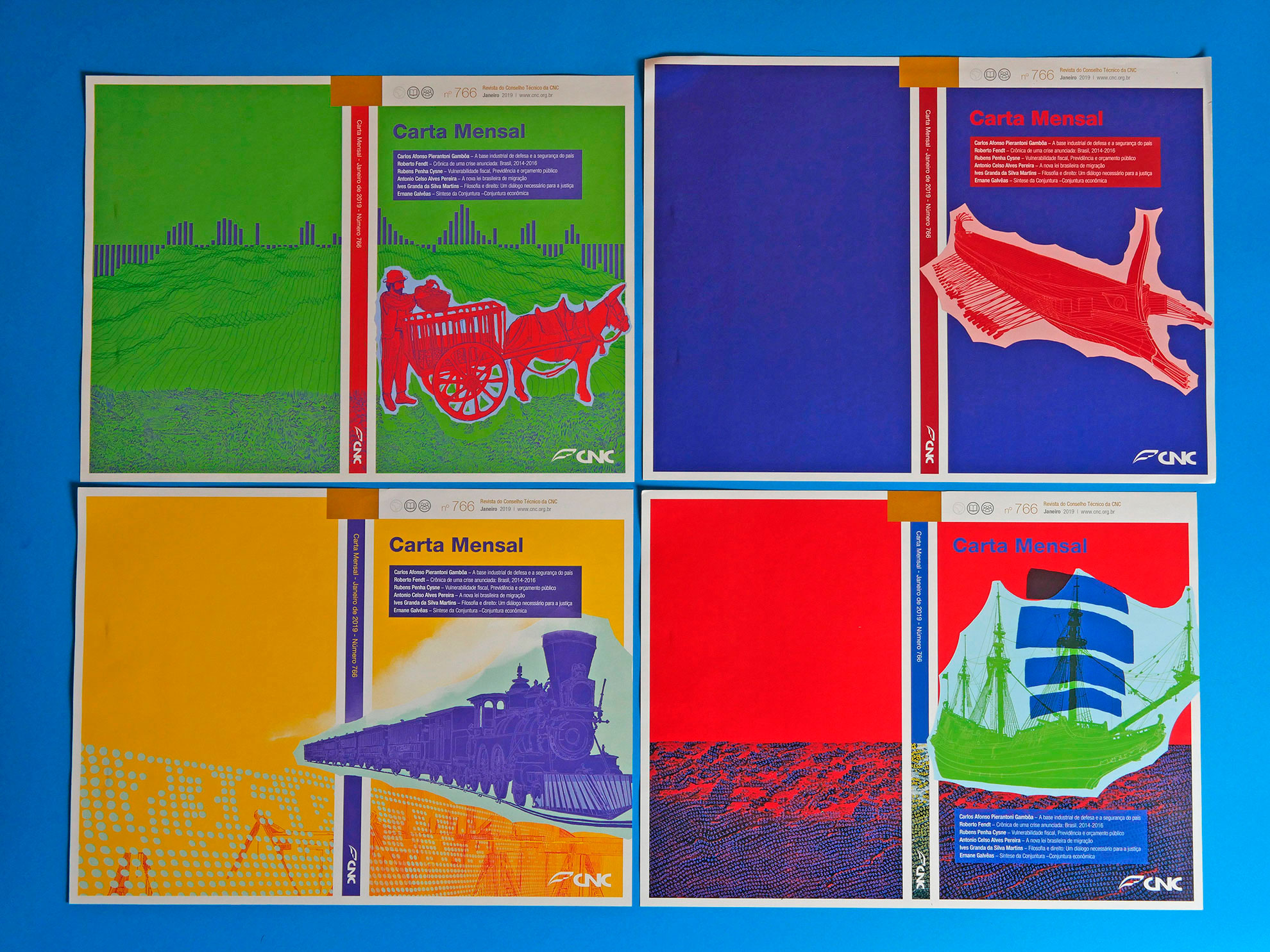
The idea behind this project was to create a cover layout for each month of the year that would give the publication the prominence that it deserved; the project was not implemented, but this initial idea has put forward, with four covers proposed here, each featuring a completely new graphic design, that is, a new layout, and a new diagramming project too.
Process and concept:
For some time, I had been exploring ways to tie together the concept for this publication, which is one of the entity’s main publications, alongside the magazine “CNC Notícias”. I have seen the need to create a set of covers to, at the very least, make an impact, as the publication always used the same cover layout.
I have developed a set of four covers that addressed important events which had had an impact on commerce, or which existed because of commerce. In each one, I have sought to interweave the old, the historical element, with the new, it has been aiming to create a contrast in each composition. I have also taken care to seek out iconic objects to make the covers more appealing. I have chosen to use modes of transport, symbols of progress, linking them to the specific event featured on each cover. This would make it easier to get the project approved, as it would resonate with the tastes of the entity’s top leadership, they are comprising representatives of Brazil’s business and commerce community, who regard the motto on the Brazilian flag, ‘Progress’, as one of the main pillars of the Brazilian’s society and a guiding symbol for the country to follow.
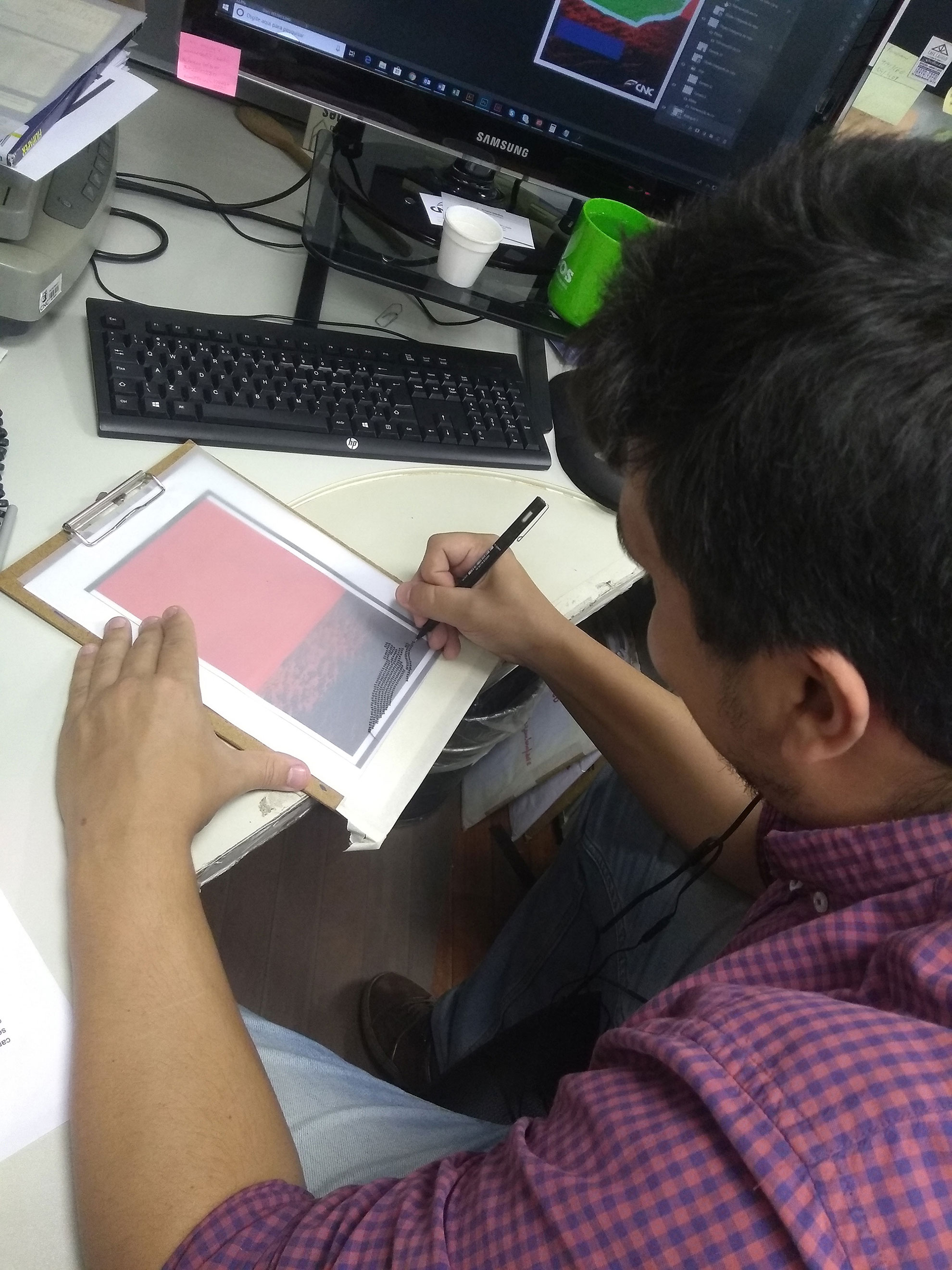
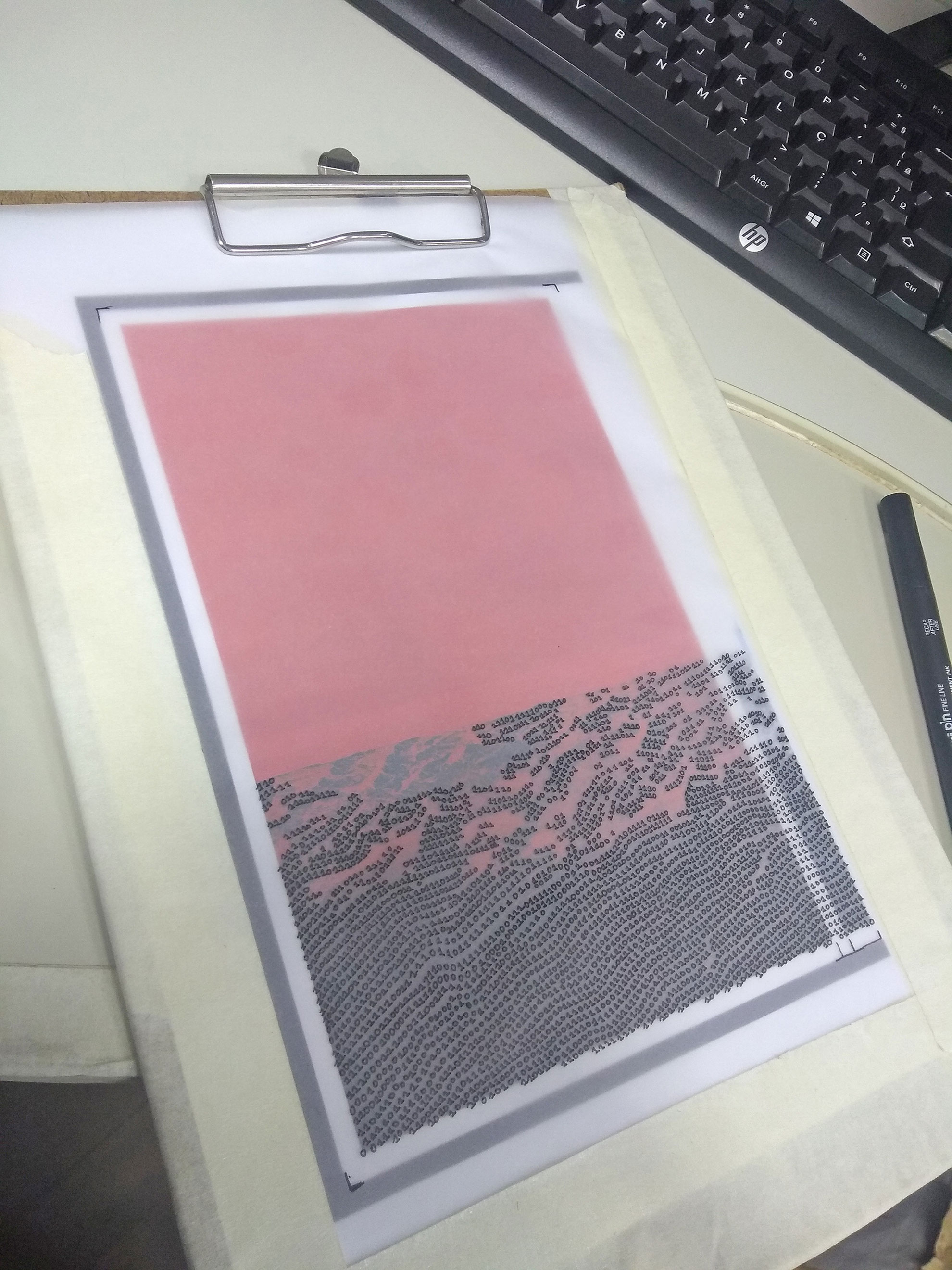
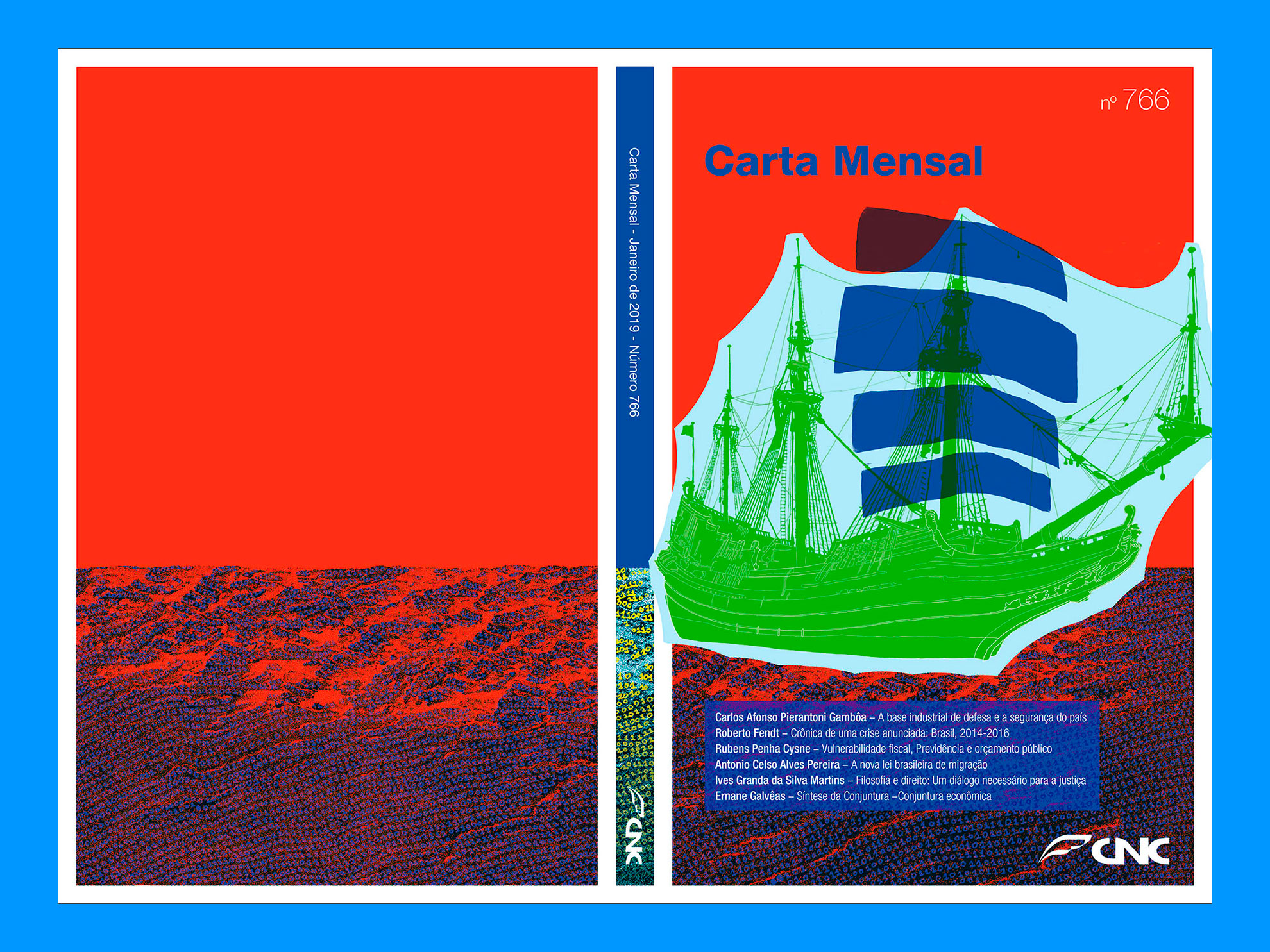
Cover 1 – The ship of the age of the America continent discovery (the event that gave rise to the Americas and subsequently to the spice trade with the commerce with India). I have placed it within a sort of stamp frame (which became a supporting element for all the other covers), with a digital sea below, featuring the zeros and ones of the digital universe.
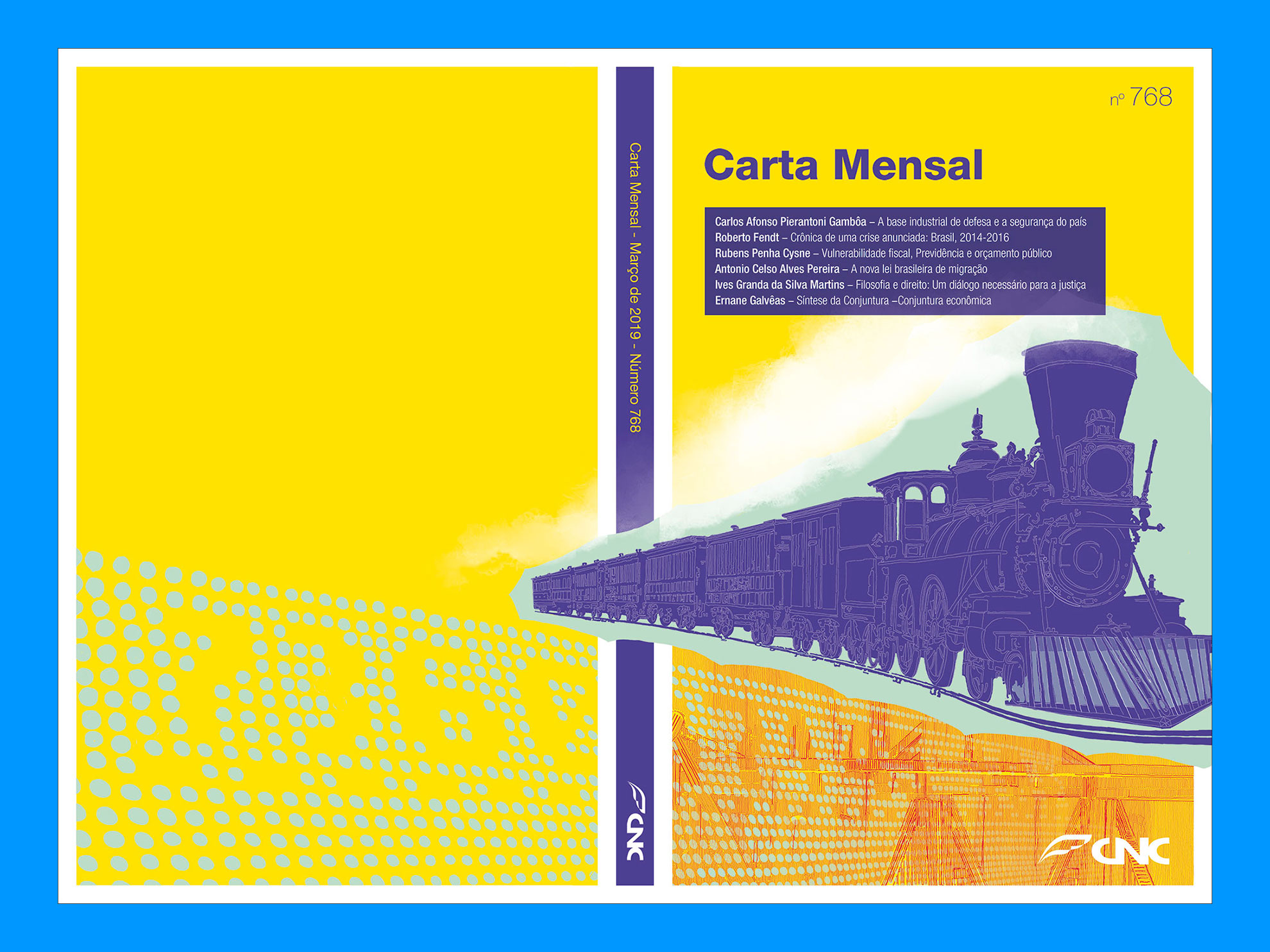
Cover 2 – An allusion to the North American railway network, where the steam train connected major cities across the United States and the word, strengthening and building trade and helping the countries to become what them are today. The contrasting element was the sequence of LEDs, which runs from the front cover to the back cover.
Cover 3 – The cart, another important mode of transport for Brazil at the colonial time when the country was predominantly rural. The design has been created using economic graphics and sound reverberation, forming the background landscape.
Cover 4 – The Phoenician ship. Due to Phoenician trade and trading posts, the alphabet that gave rise to all Western writing originated; it remained unfinished, but would have been the most accurate representation of this project’s objective given the immense importance of this historical context of trade in the transformation of the world.
1 National Confederation of Trade in Goods, Services and Tourism (CNC – cnc.org.br) – An entity of employers’ commerce union body, bringing together 34 federations across Brazil, 27 representing their respective states and 7 of these 34 operating at national level, representing over five million businesses in the trade sector that generate around 25.5 million direct and formal jobs. Through its structure, it works to ensure the sector is always involved in the formulation of public policy, monitoring the progress of relevant proposals in the National Congress and defending the Constitution, always focusing on laws that may impact the sector.
The CNC was founded on 4 September 1945; its president is responsible for the administration of two institutions with significant operations in Brazil, which form one of the largest social development systems in the world: the Social Service of Commerce (SESC – sesc.com.br) and the National Commercial Apprenticeship Service (SENAC – senac.br), the former, with social projects such as Mesa Brasil, the Ecos Sustainability Programme, etc. (operating in the following areas: Food, Social Assistance, Culture, Education, Sport, Leisure, Health, Sustainability, etc.) and the latter in supporting the training and upskilling of employees in the commercial sector (shopkeepers, waiters, chefs, hospitality staff, etc.).
2 CNC Technical Council – A group in which various men and women who have distinguished themselves in their respective fields gave lectures, which were later published as articles; these include diplomats, judges, lawyers, economists, philosophers, etc., among them the Coordinator of the CNC Technical Council and Economic Adviser to the CNC, Ernane Galvêas (former Minister of Finance of Brazil (1980–1985) and former President of the Central Bank of Brazil (1968–1974 and 1979–1980) (IN MEMORIAM)), José Bernardo Cabral (Rapporteur of the 1988 Brazilian Constituent Assembly, former Minister of Justice and former Senator of the Republic), Carlos Tadeu de Freitas Gomes (former Director of the Central Bank), Cid Heraclito de Queiroz (former Attorney-General of the National Treasury from 1979 to 1991), Ives Gandra da Silva Martins (Professor Emeritus at Mackenzie University, UNIP, UNIFEO, UNIFMU, CIEE/O Estado de São Paulo, the Army Command and General Staff Schools (ECEME), the War College (ESG) and the Federal Regional Court of the 1st Region; Honorary Professor at Austral University (Argentina), San Martín de Porres University (Peru) and Vasili Goldis University (Romania); Honorary Doctorate from the Universities of Craiova (Romania) and the PUCs of Paraná and Rio Grande do Sul, and Full Professor at the University of Minho (Portugal); Chairman of the Higher Council of Law at FECOMÉRCIO-SP; Former President of the São Paulo Academy of Letters (APL) and the São Paulo Lawyers’ Institute (IASP), Arnaldo Niskier (Member of the Brazilian Academy of Letters and former President of CIEE/RJ), Vasco Mariz (historian and diplomat, former Brazilian Ambassador to Ecuador, Israel, Cyprus, Peru and Germany), Nelson Mello e Souza (philosopher, former Vice-Chancellor of Estácio de Sá University and member of the Brazilian Academy of Philosophy), Samuel Buzaglo (lawyer, former Deputy Attorney General of the Republic), João Paulo de Almeida Magalhães (economist and researcher at the Centre for Development Studies at CORECON/RJ), Arnaldo Wald (lawyer and Full Professor at UERJ), Marcus Faver (Appellate Judge, former President of the Rio de Janeiro Court of Justice), Claudio Contador (economist, Executive Director of SILCON), Mary Del Priore (historian and writer, member of the São Paulo Academy of Letters), João Ricardo Moderno (journalist), Roberto Fendt (economist, former Special Secretary for Foreign Trade at the Ministry of Economy, Executive Secretary of the Brazil-China Business Council), Maria Beltrão (archaeologist, scientist and researcher, former professor at UERJ, former Director of External Relations at IHGB), Gilberto Paim (journalist) etc.