
LEONARDO RINALDI
 1
1
 2
2
 3
3
 4
4
 5
5
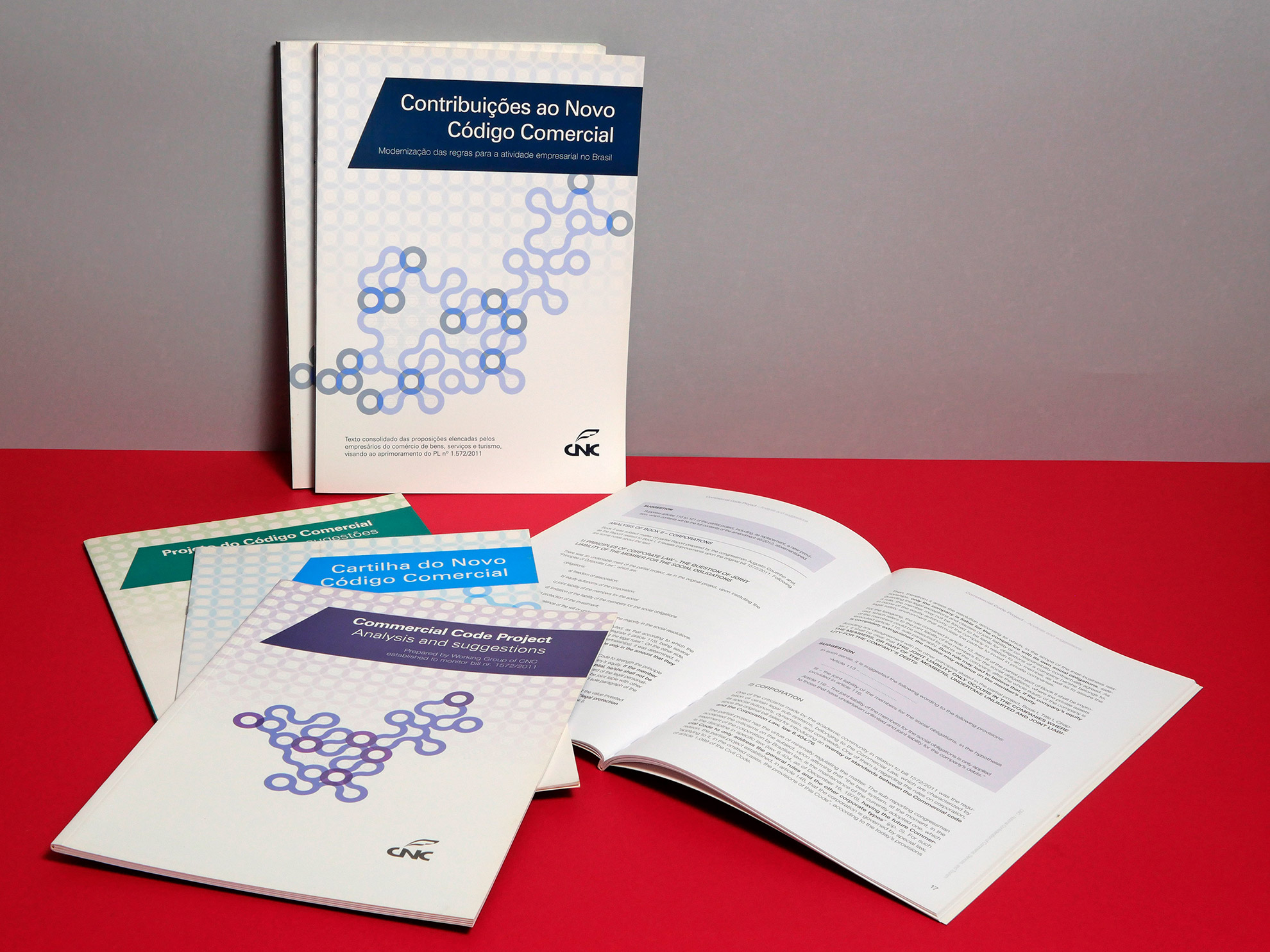
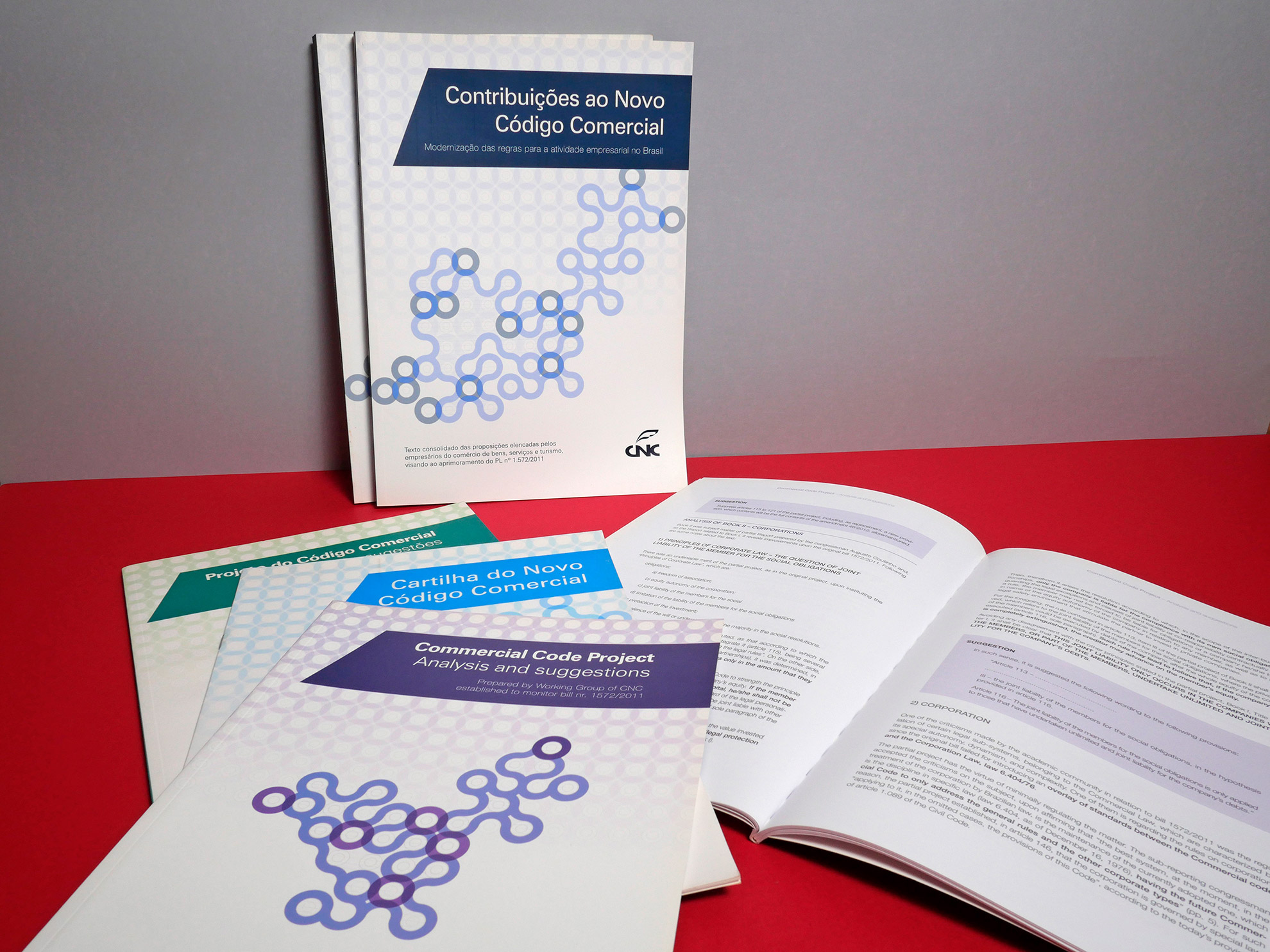
Graphic design for four books – Creation, concept and execution of the project, including partial diagramming of one of the books and the complete layout of the other three booklets, abstract illustrations for the covers, cover design and monitoring of the printing process.
The publication containing the entire Brazilian Commercial Code, supplemented by comments, suggestions for amendments to the Code, analyses, etc., signed by members those representing the interests of the National Confederation of Trade in Goods, Services and Tourism (CNC)1. The aim of the publication has been for it to serve as supporting material for the lobbying in favour of new draft of the legislation of interest to the Brazilian commerce.
Process and concept:
I have received this brief from one of the entity’s legal advisers, who has been leading this major project involving the Brazilian Chamber of Deputies and the Senate, has aimed at reforming the Brazilian Commercial Code.
Creating a visual design for publications on legal topics is always very complicated, as there is a huge tendency to fall into clichés, such as images of scales, statues of Justice, etc. The head of the CNC’s Communications Department has wanted me to take an abstract approach; she had already rejected six previous cover designs before this one. The idea that resulted in the cover is an abstraction in the form of graphic elements; it alludes to a broad context of items, with a larger group of elements representing the original content, and other smaller groups of elements attached to them, linked together to form a single latticework.
The subject matter was very serious, so I have adopted a layout with a single column per page for the booklets, I has been seeking to provide space for the insertion of the content and the design, thereby creating a clear hierarchy of elements to highlight the observations that has been added to the original Code. For the same reason, to distinguish the theme, I have used two colours per cover (the book and three booklets, one of which is in English), it has maintained a very institutional and corporate style.
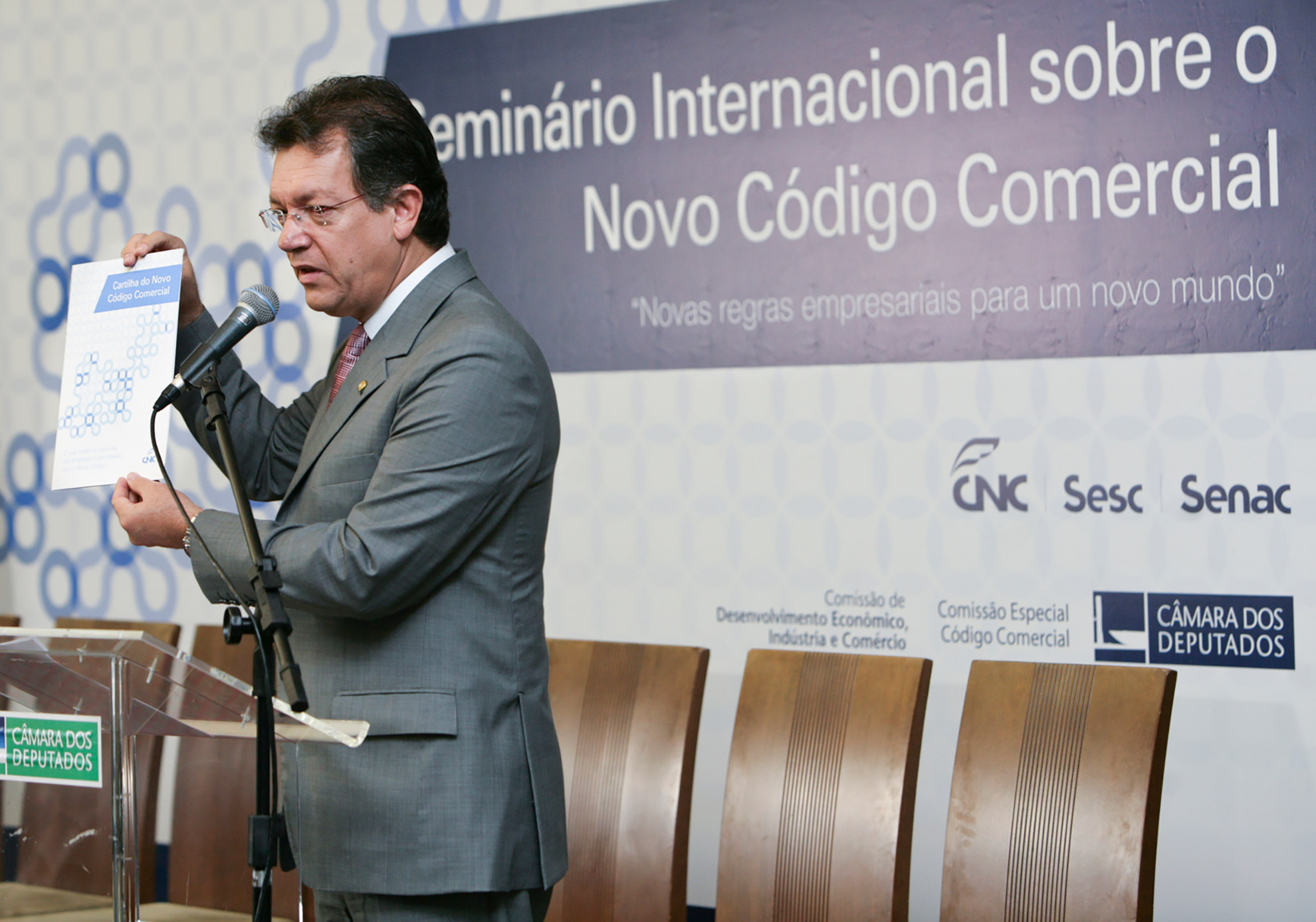
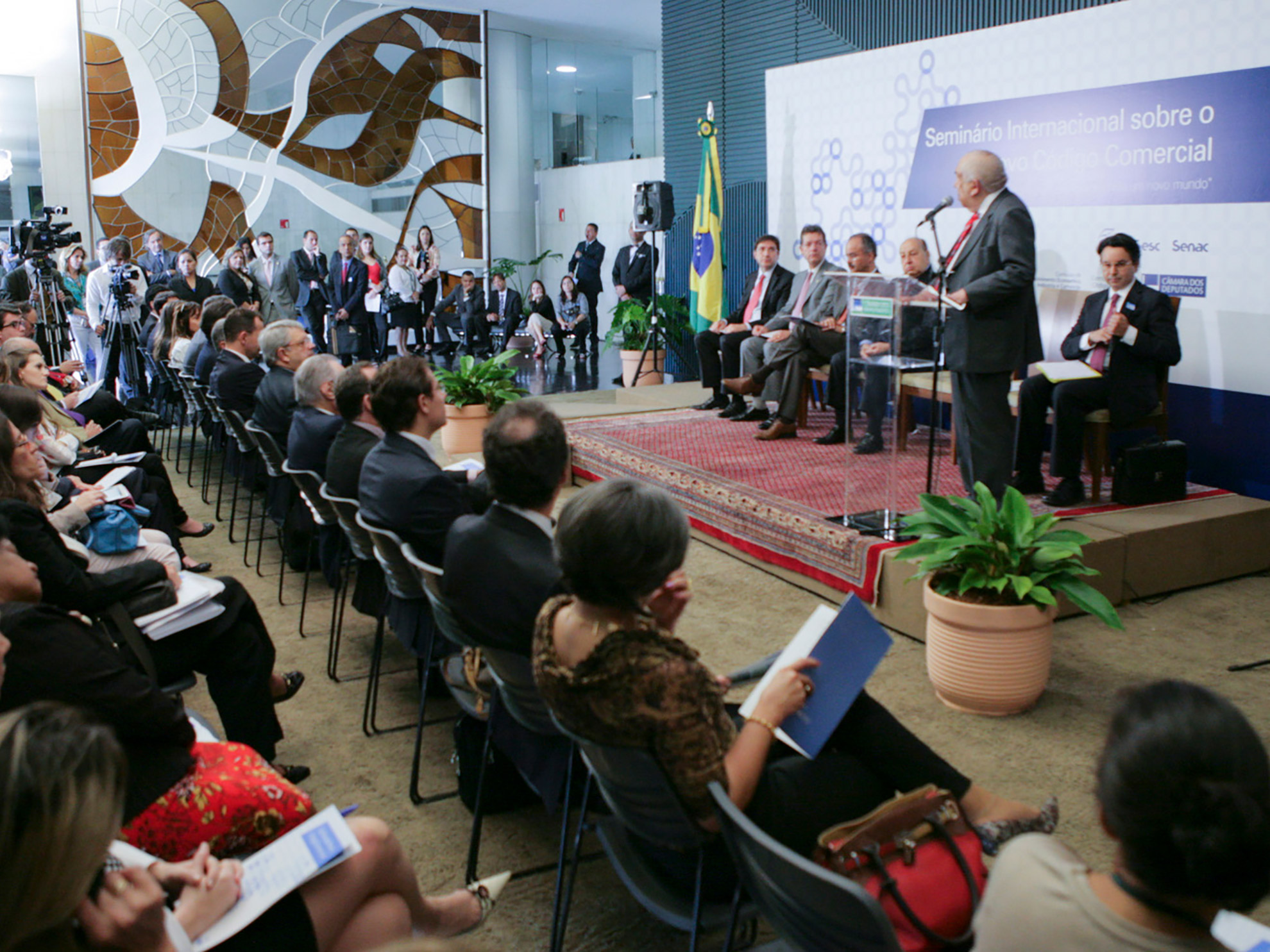
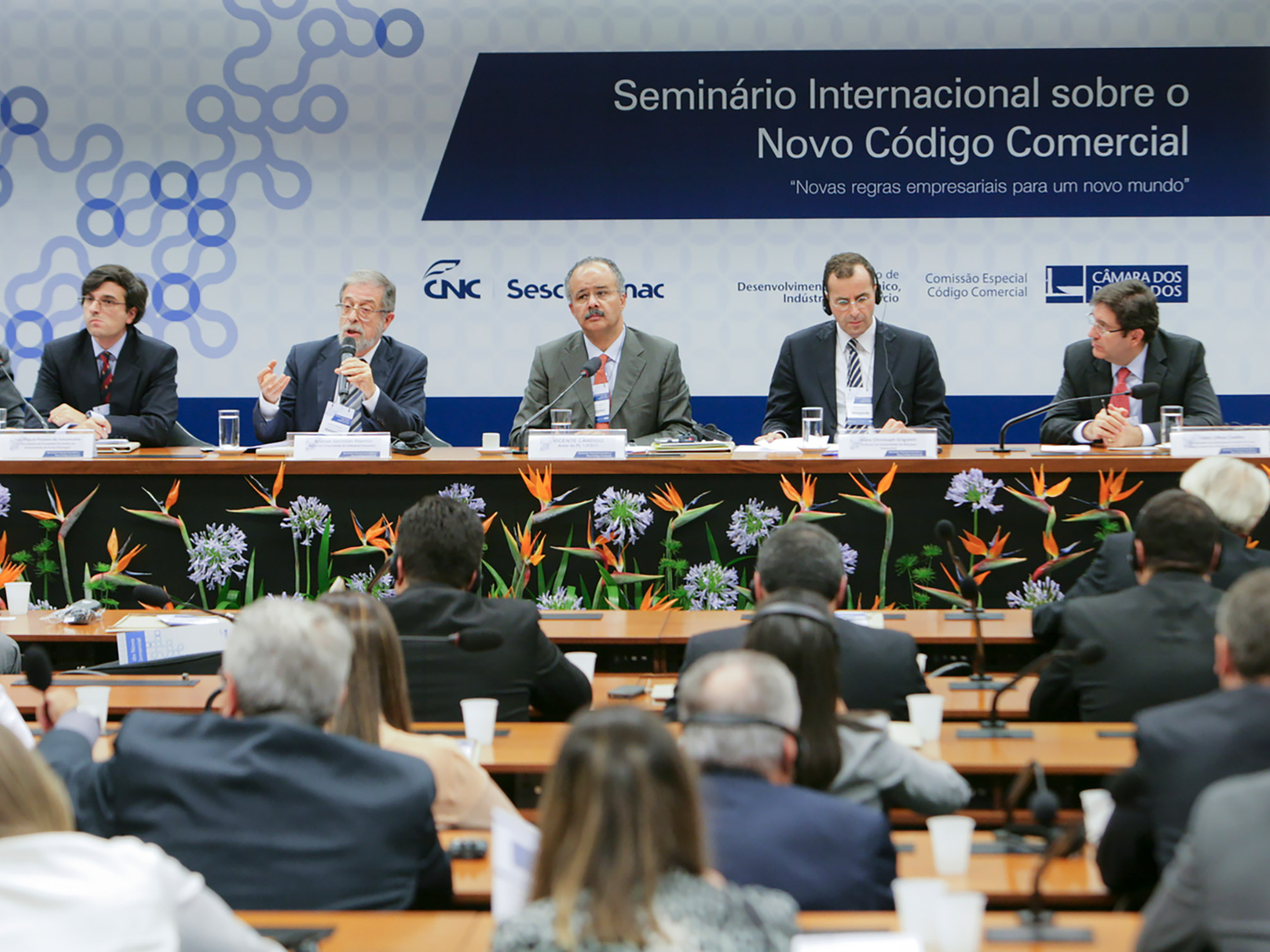
In the images 3, 4 and 5, some parliamentarians are holding a seminar on the subject.
1 National Confederation of Trade in Goods, Services and Tourism (CNC – cnc.org.br) – An employers’ trade union organisation, bringing together 34 federations across Brazil, 27 representing their respective states and 7 of these 34 operating at national level, representing some five million businesses in the trade sector that generate around 25.5 million direct and formal jobs; through its structure, it works to ensure the sector is always involved in the formulation of public policy, monitoring the progress of relevant proposals in the National Congress and defending the Constitution, always focusing on laws that may impact the sector.
The CNC was founded on 4 September 1945; its president is responsible for the administration of two institutions with significant operations in Brazil, which form one of the largest social development systems in the world: the Social Service of Commerce (SESC – sesc.com.br) and the National Commercial Apprenticeship Service (SENAC – senac.br), the former, with social projects such as Mesa Brasil, the Ecos Sustainability Programme, etc. (operating in the following areas: Food, Social Assistance, Culture, Education, Sport, Leisure, Health, Sustainability, etc.), and the latter in supporting the training and upskilling of employees in the commerce sector (shopkeepers, waiters, chefs, hospitality staff, etc.).